Column · @u3m4xwc0jm
How Agricultural Drones Are Reshaping Farm Work in the UK
Farming has never been a job you do from a desk. You walk fields, read the weather, and make calls that affect the whole season. Over the last few years, a new tool has quietly entered that rhythm: the agricultural drone. Not as a gimmick or a futuristic concept, but as a practical piece of equipment that sits alongside the tractor and the sprayer. In the UK, where fields are irregular and weather is unpredictable, these machines are proving themselves in ways that surprise even the farmers who buy them.
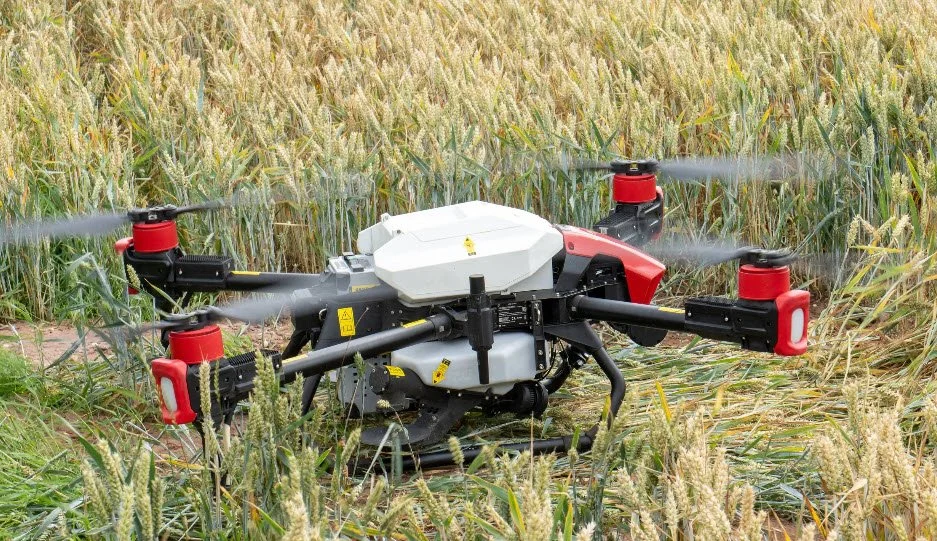
The first time I saw a drone working a field of winter wheat, it was doing something I had only read about. It moved low and steady over the crop, a fine mist falling behind it. The farmer stood at the edge of the field with a tablet, watching the coverage map fill in. He told me later that what sold him was not the technology itself but the time it saved. A job that used to take a full day with a tractor and a boom sprayer now took just over an hour. And the ground was not compacted at all. That matters more than most people realise.
Why the Ground Matters
Soil compaction is a quiet drain on yields. Every time you drive a heavy tractor across a wet field, you squeeze the air out of the soil. Roots struggle. Water pools. The crop suffers. Agricultural drones solve this by staying in the air. They apply nothing heavier than themselves. When you are spraying or spreading seed, the drone does not touch the ground at all. That alone can justify the investment for farms with heavy clay soils or fields that stay damp late into spring.
There is also the question of access. Many UK farms have small, awkwardly shaped fields bordered by hedges, ditches, or steep slopes. A tractor cannot always reach every corner, or it damages the crop trying to get there. A drone can fly over those obstacles and treat the whole field from above. That means no missed patches, no wasted product, and no damaged crop along the headlands.
Spraying with Precision
Crop spraying from the air is not new, but the level of control available now is different. Modern systems like the DJI Agras use GPS guidance and multispectral sensors to map the field first, then apply exactly what each zone needs. This is variable rate application in practice. Instead of covering the whole field with the same dose, the drone reads the crop health data and adjusts on the fly. A patch of stressed plants gets more attention. A healthy area gets less. The result is better plant protection with fewer agrochemicals overall.
I watched a trial last spring where a farmer used drone spraying to treat a late outbreak of rust in barley. The conventional approach would have meant running a sprayer through the crop, damaging a lot of healthy plants in the process. The drone flew over the infected patches, applied the fungicide exactly where it was needed, and left the rest of the field untouched. The yield loss was minimal. That kind of targeted work is hard to achieve with ground equipment, especially when the crop is too tall to drive through.
Spreading Seed from Above
Seed spreading by drone is still a relatively new practice in the UK, but it is growing fast. The ability to cover rough or wet ground without compaction makes it ideal for establishing cover crops, overseeding pastures, or reseeding after a failed crop. A drone can carry a hopper filled with seed and spread it evenly across the field using a spinning disc or a pneumatic system. The coverage is surprisingly consistent, especially when the drone follows a pre-programmed route based on field mapping data.
One contractor I spoke to uses a drone for spreading grass seed into existing pasture. He says the results are as good as a conventional seeder, and the process is faster because he does not have to wait for the ground to dry out enough to support a tractor. In the wetter parts of the country, that can mean the difference between getting a crop in and missing the window entirely. The same applies to fertiliser. Applying granular fertiliser by drone is becoming more common, particularly on steep or boggy ground where a spreader cannot go.
Seeing the Field from Above
Before you spray or spread anything, you need to know what you are dealing with. That is where aerial imaging and remote sensing come in. Drones equipped with multispectral sensors can fly a field and produce detailed maps of crop health, weed pressure, and moisture levels. The data is processed into something a farmer can act on: a colour-coded map showing which areas need attention.
Systems like the eBee from SenseFly are fixed-wing drones designed specifically for this kind of survey work. They cover large areas quickly and produce high-resolution imagery that can be stitched into orthomosaic maps. Those maps feed into variable rate application plans, but they also help with everyday decisions like irrigation scheduling or pest scouting. The yield data gathered over a season builds into a record that helps the farmer plan next year's rotations more intelligently.
Crop health monitoring with drones is not just about spotting problems. It is about seeing patterns you would miss from the ground. A slight discolouration in one corner of a field might be the first sign of a nutrient deficiency or a drainage issue. By the time you notice it walking the field, it might be too late. A drone can catch it early, while there is still time to correct it.
Defoliation and Other Specialist Jobs
Some crops require defoliation before harvest. In cotton and certain legumes, removing the leaves helps the crop dry evenly and makes mechanical harvesting easier. In the UK, defoliation is less common, but it does come up in some vegetable crops and in seed production. Drones can apply defoliants with the same precision they use for any other spray, targeting only the parts of the plant that need it. That reduces chemical use and avoids stressing the crop unnecessarily.
There are also niche uses that are just starting to emerge. Some growers are experimenting with drones for frost protection, using the downwash from the rotors to mix the air and prevent cold air from settling on the crop. Others are using them for pollination support in orchard crops. These applications are still experimental, but they show how the basic platform of the agricultural drone can be adapted to problems no one thought of solving from the air.
Choosing the Right Platform
Not all drones are built the same. The market has consolidated around a few reliable platforms. The DJI Agras series is the most widely used for spraying and spreading. It is rugged, easy to maintain, and has good software support. XAG offers an alternative with a different approach to the spraying mechanism, using ultrasonic nozzles that produce a very fine droplet. That can be useful when you need to minimise drift or apply a small volume of liquid per hectare.
For mapping and survey work, the eBee from SenseFly is a proven choice. It is a fixed-wing design, which means it covers more ground per battery than a multirotor. The trade-off is that it needs more space to launch and land, and it cannot hover. For most farmers, a combination of a multirotor sprayer and a fixed-wing mapper is the ideal setup. But if you are just starting out, a single multirotor with a good camera can do both jobs reasonably well.
The Practical Reality
There is no shortage of hype around agricultural drones. The reality is more measured. They are not going to replace tractors or sprayers entirely. They are a tool for specific jobs where ground equipment is inefficient, damaging, or impossible to use. That list of jobs is longer than most people think, and it grows every year as the technology improves and farmers find new ways to use it.
The best advice I can give to anyone considering a drone for their farm is to start with a clear problem. Do not buy a drone because it looks impressive. Buy it because you have a field you cannot spray without crushing the crop, or a patch of ground that stays too wet to drive on, or a need for better data than your eyes can give you. Once you have the problem, the drone becomes a solution. And that is where the real value lives.
In the end, the technology only matters if it makes the work better. For a growing number of UK farmers, agricultural drones are doing exactly that. They are saving time, reducing chemical use, and protecting the soil. Those are not small wins. They add up over a season, and they change the way you think about what is possible on your own land.